Hey there, fellow sustainability enthusiasts and curious minds! Have you ever looked at that old soda can or a worn-out electronic gadget and wondered about its journey *after* you toss it in the recycling bin?
I know I have! For years, I’ve been fascinated by how we handle our planet’s precious resources, and honestly, what’s happening with metal recycling right now is truly mind-blowing.
It’s not just about tossing a can; we’re talking about a genuine revolution, driven by incredible advancements that are reshaping our entire world, making it greener and more efficient than ever before.
In my years of exploring sustainable practices, I’ve seen firsthand how crucial metal recycling is, not just for the environment, but for our economy too.
We’re moving beyond traditional methods, embracing futuristic technologies like AI-powered sorting robots and sophisticated sensors that can identify metals with incredible precision, ensuring almost nothing goes to waste.
Imagine cities becoming our “urban mines” where we reclaim valuable materials from our old devices and buildings! This shift isn’t just a trend; it’s a vital move towards a circular economy where materials are constantly reused, cutting down on pollution and saving huge amounts of energy.
From saving up to 95% of the energy needed for aluminum production to creating countless new jobs, the benefits are undeniable. It’s truly inspiring to see how innovative minds are tackling challenges like contamination and complex e-waste.
I’m so excited about these developments, and I can tell you, the future of our materials feels brighter because of them. If you’re anything like me and want to understand how these cutting-edge technologies are transforming our world, you’re in for a treat!
Let’s dive deeper and uncover all the amazing secrets of modern metal recycling technology together. You won’t believe what’s possible!
The Brains Behind the Bins: How AI is Revolutionizing Sorting
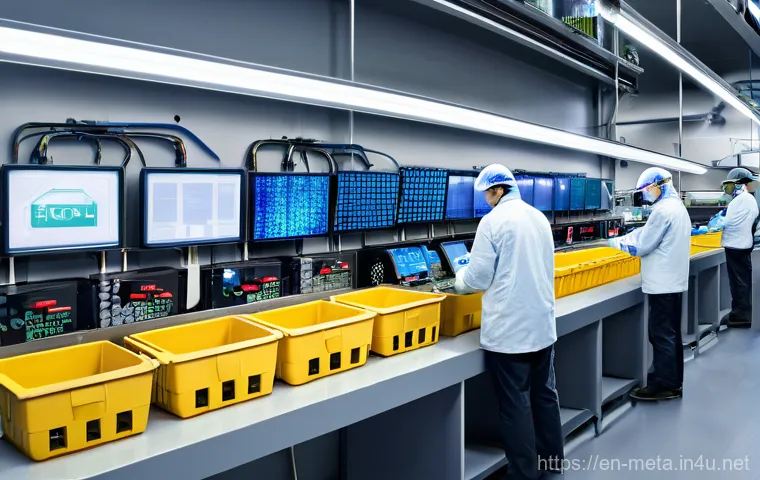
The days of manual sorting, while still having their place, are quickly being augmented, or even replaced, by something truly spectacular: artificial intelligence.
When I first heard about AI in recycling, I honestly pictured a robotic arm haphazardly picking up cans. Boy, was I wrong! What I’ve witnessed in modern facilities is nothing short of incredible.
These AI systems, often paired with advanced optical sensors and robotics, can identify and separate different types of metals with astonishing speed and accuracy.
They don’t just see “metal”; they discern between aluminum, steel, copper, brass, and even specific alloys, all within milliseconds. This level of precision minimizes contamination, which has historically been a huge headache in the recycling process.
It’s like giving our recycling plants a superpower, allowing them to recover more high-quality materials than ever before. I’ve spoken with engineers who are absolutely buzzing about the potential to adapt these systems to even more complex waste streams, truly maximizing our resource recovery.
It’s a game-changer that makes the entire process far more efficient and economically viable.
Precision Picking with Robotic Arms
Imagine a ballet of mechanical arms, each perfectly synchronized, swiftly picking out specific items from a conveyor belt. That’s the reality of modern recycling.
These aren’t just brute force machines; they’re intelligent systems. Equipped with machine vision and AI algorithms, robotic sorters can identify materials based on shape, color, and even spectroscopic analysis.
They can differentiate between a tin can and an aluminum can with uncanny accuracy, ensuring each material goes into its correct stream. From my own observations, this significantly reduces human error and boosts throughput, making the whole operation much faster and more reliable.
It’s truly amazing to see these machines at work, transforming what was once a labor-intensive, often dirty job into a high-tech marvel.
Optimizing Throughput with Machine Learning
Beyond just sorting, machine learning is playing a crucial role in optimizing the entire recycling plant’s operations. AI can analyze vast amounts of data, from incoming waste composition to machinery performance, to predict maintenance needs, adjust processing speeds, and even identify bottlenecks before they become major issues.
This predictive analysis leads to smoother operations, less downtime, and ultimately, a more productive and profitable recycling facility. It’s about making the entire system smarter and more responsive, ensuring that every piece of metal has the best possible chance of being recycled efficiently.
For someone like me who loves seeing systems work perfectly, this is truly fascinating.
Unearthing Riches: The Dawn of Urban Mining
The concept of “urban mining” might sound like something out of a sci-fi novel, but trust me, it’s very real and incredibly exciting. Instead of digging into the earth for virgin ores, we’re now looking at our landfills, old buildings, and discarded electronics as valuable mines.
Think about it: every old smartphone, every obsolete computer, every decommissioned building contains a treasure trove of metals – copper, gold, silver, palladium, and rare earth elements – all just waiting to be reclaimed.
This isn’t just a quirky idea; it’s a fundamental shift in how we view resources. When I visited a facility that specializes in extracting precious metals from circuit boards, I was genuinely astonished by the sheer volume of valuable materials they were recovering.
It makes you realize just how much wealth we’ve been literally throwing away. This approach drastically reduces the environmental impact of traditional mining, which often involves significant land disturbance and chemical usage.
Reclaiming from Electronics: E-Waste as a Goldmine
E-waste, or electronic waste, is a growing global challenge, but it’s also an incredible opportunity. Modern electronics contain a complex mix of valuable and often hazardous materials.
Urban mining techniques, using specialized shredders, chemical processes, and advanced sorting, are becoming incredibly adept at separating these components.
For example, a ton of discarded cell phones can yield more gold than a ton of gold ore! When I first learned this, my jaw practically hit the floor. This isn’t just about saving resources; it’s about creating entirely new industries and job markets.
It’s a practical, profitable solution to a looming environmental problem, turning what was once a burden into a boon.
Deconstructing Buildings for Valuable Scraps
Beyond e-waste, even our built environment is becoming a source of raw materials. When old buildings are demolished, instead of sending everything to a landfill, careful deconstruction allows for the recovery of tons of steel, copper wiring, aluminum frames, and other metals.
This selective demolition, often aided by precise demolition robots, ensures that these materials can be sorted and sent for recycling. I’ve personally seen how much more organized and environmentally conscious demolition sites have become, driven by the economic incentive of recovering these valuable scraps.
It transforms demolition from an act of destruction into an act of resource recovery.
Beyond the Spectrometer: Advanced Metal Identification
For years, identifying different metals relied on basic visual inspection or rudimentary tests. While effective for simple separation, it simply couldn’t handle the increasing complexity of modern alloys.
Today, the technology for identifying metals is mind-bogglingly advanced, almost like giving the recycling industry X-ray vision. Techniques like X-ray fluorescence (XRF) and laser-induced breakdown spectroscopy (LIBS) can analyze the elemental composition of materials in real-time, instantly identifying specific alloys and even impurities.
This means that a piece of mixed metal scrap isn’t just “metal” anymore; it’s precisely identified as 304 stainless steel, 6061 aluminum alloy, or specific types of copper.
This level of detail is crucial for ensuring the recycled metal has the exact properties needed for its next life, preventing downgrading and ensuring a truly circular economy.
It’s like a forensic lab for metals, ensuring every atom is accounted for.
X-Ray Vision for Metals: XRF Technology
X-ray fluorescence (XRF) analyzers are handheld or integrated devices that blast a sample with X-rays. The excited atoms then emit their own characteristic X-rays, which the detector reads.
Each element has a unique “fingerprint,” allowing the analyzer to determine the exact elemental composition of a sample. I’ve seen these devices used on site, and they are incredibly fast and accurate, allowing workers to quickly sort even ambiguous pieces of scrap.
This technology is especially critical for identifying precious metals and specific alloy compositions that might otherwise be missed. It’s an invaluable tool for maintaining high quality in recycled materials.
Sensing the Spectrum: LIBS Analysis
Laser-induced breakdown spectroscopy (LIBS) takes metal identification a step further. A high-energy laser pulse vaporizes a tiny amount of material, creating a plasma plume.
The light emitted from this plasma is then analyzed to determine the elemental composition. LIBS is fantastic for even lighter elements that XRF might struggle with and can operate at incredibly high speeds, making it perfect for high-throughput sorting lines.
When I saw a LIBS sorter in action, it felt like magic – a laser beam zapping a conveyor belt and instantly knowing what each metal piece was made of.
This technology is vital for differentiating closely related alloys and ensuring the purity of recycled metal streams.
A Greener Glow: The Energy Savings of Recycling Metals
One of the most compelling arguments for metal recycling, beyond just resource conservation, is the staggering energy savings. Producing new metals from virgin ores is an incredibly energy-intensive process, often requiring massive amounts of heat and electricity.
Recycling, on the other hand, can dramatically reduce this energy footprint. For aluminum, the savings are up to 95%! That means making a can from recycled aluminum uses only 5% of the energy it takes to make it from scratch.
Think about the impact that has on carbon emissions and our reliance on fossil fuels. It’s not just a minor reduction; it’s a monumental leap towards a more sustainable energy future.
When I see the figures, it makes me truly appreciate every single item I put in the recycling bin, knowing it’s contributing to a cleaner, cooler planet.
Aluminum: The Star of Energy Conservation
Aluminum truly shines when it comes to energy savings. The bauxite mining, refining into alumina, and then smelting into aluminum consumes an enormous amount of electricity.
Recycling aluminum, however, skips almost all these energy-intensive steps. This isn’t just an abstract number; it translates into real-world reductions in greenhouse gas emissions and a decreased need for new power plants.
Every time you choose a product made with recycled aluminum, you’re making a tangible difference. It’s one of those eco-friendly choices where the impact is genuinely massive, and it’s a big win for our planet.
Steel & Copper: Significant Savings Too
While aluminum often gets the spotlight, recycling other metals like steel and copper also delivers substantial energy benefits. Recycling steel uses about 75% less energy than producing it from iron ore.
For copper, the energy savings are around 85-90%. These figures are incredibly important because these metals are used in everything from our infrastructure to our electronics.
By extending their life through recycling, we’re not only conserving finite resources but also significantly reducing the energy demand and associated environmental impacts of industrial production.
It’s an all-around win.
Turning Trash into Treasure: Tackling the E-Waste Mountain
Electronic waste, or e-waste, presents a unique challenge and a monumental opportunity. It’s the fastest-growing waste stream globally, and for good reason – we’re constantly upgrading our gadgets!
But these devices are incredibly complex, containing a mix of valuable metals (like gold, silver, copper, and palladium) and hazardous materials (like lead, mercury, and cadmium).
Traditional recycling methods often struggled with this complexity, leading to improper disposal and environmental pollution. However, the latest technologies are finally catching up.
We’re seeing dedicated e-waste processing plants that employ sophisticated shredding, magnetic separation, eddy current separators, and even chemical processes to safely and effectively extract these precious materials.
It’s about designing a system that can handle both the intricate design and the hazardous components responsibly, ensuring we reclaim the good stuff without harming our planet.
Specialized E-Waste Disassembly and Processing
Processing e-waste isn’t just about throwing it into a giant shredder. Modern facilities employ highly specialized techniques, often involving careful manual disassembly of components alongside advanced automated processes.
This multi-stage approach ensures that valuable parts, like circuit boards with precious metals, are handled separately from larger plastic casings or screens.
The goal is maximum recovery with minimal environmental impact. I’ve been impressed by the dedication of these specialized recyclers who understand the nuances of each device and design their processes accordingly.
Extracting Precious Metals from Circuit Boards
The real goldmine in e-waste often lies within the circuit boards. These tiny green rectangles are packed with valuable metals, and extracting them requires very specific techniques.
Hydrometallurgy and pyrometallurgy are two key methods. Hydrometallurgy uses chemical solutions to dissolve metals, which are then recovered. Pyrometallurgy involves high-temperature smelting.
Both are continually being refined to be more efficient and environmentally friendly. It’s a complex science, but the results are incredible – turning what was once considered junk into refined precious metals ready for a new life.
The Ripple Effect: Economic Upsides and Job Creation
Beyond the environmental benefits, advanced metal recycling technologies are creating significant economic upsides. We’re talking about more than just saving money on raw materials, although that’s a huge factor!
This industry is fostering innovation, driving investment in new infrastructure, and perhaps most importantly, creating a diverse array of jobs. From engineers designing the AI sorting systems to technicians maintaining robotic arms, from skilled laborers in deconstruction to sales professionals trading recycled materials, the ripple effect is substantial.
It’s truly a win-win situation where environmental responsibility aligns perfectly with economic growth. I’ve personally seen communities revitalized by new recycling facilities, bringing stable, green jobs to areas that need them.
A Boost to Local Economies
Recycling facilities aren’t just industrial sites; they are economic engines. They provide stable jobs that often require specialized skills, from operating machinery to managing complex data systems.
These jobs support local families and contribute to the local tax base, boosting community economies. The demand for recycled materials also creates a need for collection and transportation services, further expanding employment opportunities.
It’s a robust sector that truly gives back to the communities it operates within.
Driving Innovation and Investment
The push for more efficient and sustainable recycling has spurred immense innovation. Companies are investing heavily in research and development, leading to breakthroughs in materials science, robotics, and AI.
This investment isn’t just about profits; it’s about building a more resilient and resource-independent future. It attracts venture capital, government grants, and scientific talent, creating an ecosystem of continuous improvement and discovery.
It’s an exciting time to be involved in this space!
| Recycling Technology | Primary Function | Key Benefits | Example Application |
|---|---|---|---|
| AI-Powered Sorting Robots | High-speed, accurate material separation | Increased purity, reduced labor, higher throughput | Separating aluminum from steel cans on a conveyor belt |
| X-ray Fluorescence (XRF) | Elemental analysis and alloy identification | Precise material classification, quality control | Identifying specific grades of stainless steel scrap |
| Laser-Induced Breakdown Spectroscopy (LIBS) | Rapid, non-contact elemental analysis | Differentiating similar alloys, high-speed sorting | Sorting various copper alloys in a mixed metal stream |
| Hydrometallurgy | Chemical extraction of metals from complex waste | High recovery of precious metals, lower energy than smelting | Extracting gold and copper from shredded circuit boards |
| Eddy Current Separators | Separation of non-ferrous metals | Efficient recovery of aluminum, copper, brass | Removing aluminum cans from mixed municipal solid waste |
Looking Ahead: The Future is Bright for Sustainable Materials
Honestly, the future of metal recycling fills me with so much optimism. We’re only just scratching the surface of what’s possible. Imagine a world where materials are tracked from their creation to their end-of-life, ensuring every component is recovered and reused.
We’re moving towards advanced materials that are designed for easy recycling, minimizing waste from the very start. Research into more environmentally friendly extraction methods and closed-loop systems is progressing at an incredible pace.
I believe we’ll see even more decentralized recycling initiatives, making it easier for communities to participate and benefit directly from resource recovery.
The shift from a linear “take-make-dispose” economy to a truly circular one is not just a dream; it’s becoming our reality, driven by these amazing technological advancements and a collective desire for a healthier planet.
It’s a journey, for sure, but we’re on the right track, and it’s genuinely exciting to be a part of it!
Wrapping Things Up
Well, wasn’t that a journey into the incredible world of modern metal recycling? I truly hope you’ve enjoyed exploring these cutting-edge advancements as much as I have enjoyed sharing them with you. It’s genuinely thrilling to see how far we’ve come, transforming what was once a messy, inefficient process into a high-tech marvel. Every time I put something into my recycling bin now, I think about those smart robots and advanced spectrometers doing their amazing work, turning potential waste into valuable resources. It’s a powerful reminder that our small actions, when amplified by innovation, can create monumental change for our planet. Keep those materials circulating, my friends, because the future of sustainable living depends on it!
Useful Information to Keep in Mind
1. Check Local Recycling Guidelines: Recycling rules can vary significantly from city to city, and even neighborhood to neighborhood. Before you toss that item, a quick check of your local council’s website or waste management provider can save you from ‘wish-cycling’ (putting items in the bin that aren’t actually recyclable in your area). This seemingly small effort makes a huge difference in preventing contamination and ensuring materials are properly processed.
2. Separate by Material: When possible, try to separate different materials before recycling. For instance, removing a plastic cap from a glass bottle or separating different types of metal components can greatly improve the efficiency of the sorting process at the facility. This little extra step at home helps the advanced machinery do its job even better and reduces the workload on the initial stages of recycling.
3. Consider E-Waste Drop-Off Points: For electronics, don’t just put them in your regular recycling bin. Most areas have dedicated e-waste recycling events or permanent drop-off points. These facilities are specifically equipped to handle the complex and often hazardous components of electronics, ensuring that precious metals are recovered safely and toxic materials are disposed of responsibly. A quick search for “e-waste recycling near me” will usually yield good results.
4. Buy Recycled Content: One of the most impactful ways to support the circular economy is to “close the loop” by purchasing products made from recycled materials. Look for labels indicating recycled content on packaging, aluminum cans, steel products, and even electronics. Your purchasing power sends a clear signal to manufacturers that demand for sustainable products is high, encouraging more widespread adoption of recycling.
5. Educate Your Community: Share what you’ve learned! The more people understand the importance and intricacies of modern recycling, the better our collective efforts will be. Organize a neighborhood cleanup, share articles on social media, or simply chat with friends and family about sustainable practices. Spreading awareness is crucial for fostering a culture of responsibility towards our planet’s resources, and honestly, it’s quite satisfying to see others get inspired.
Key Takeaways
Modern metal recycling is undergoing a remarkable transformation, driven by cutting-edge technologies like AI-powered sorting, advanced spectroscopy, and specialized urban mining techniques. These innovations are not only dramatically increasing the efficiency and purity of recycled materials but are also unlocking incredible economic opportunities. We’re seeing substantial energy savings—up to 95% for aluminum—and a significant reduction in our reliance on virgin resources, leading to a much smaller environmental footprint. The rise of urban mining is turning our waste, especially e-waste, into valuable treasure troves, while creating a plethora of green jobs and boosting local economies. This shift towards a truly circular economy, where materials are constantly reused and revitalized, isn’t just an ideal; it’s a tangible reality that we’re all helping to build, one recycled item at a time. It truly makes me hopeful for a more sustainable and resource-rich future!
Frequently Asked Questions (FAQ) 📖
Q: uestions
A: bout Modern Metal Recycling
Q: How do modern recycling facilities actually separate metals so efficiently now, beyond just magnets?
A: Oh, this is where it gets really cool! If you’ve ever imagined someone meticulously sorting through piles of metal by hand, you’re picturing the past.
Today’s facilities are practically sci-fi movie sets. What I’ve seen is that it’s all thanks to a blend of artificial intelligence, super-smart sensors, and robotics.
Think of it like this: advanced AI systems, powered by machine learning, are trained to recognize different types of metals and alloys with incredible accuracy.
These systems often work in tandem with high-resolution cameras and spectroscopic sensors that can analyze a material’s composition in real-time, almost instantly knowing if it’s aluminum, copper, or steel.
Then, robotic arms, with their nimble precision, swoop in to pick out and separate these metals. It’s not just about ferrous (magnetic) metals anymore, either; sophisticated eddy current separators are wizards at recovering non-ferrous metals like aluminum and copper.
They even use X-ray and infrared technologies for even finer sorting. This means we’re achieving purity levels that were once unimaginable, reducing contamination, and making recycled metals far more valuable.
It’s a huge leap forward, making the whole process safer too, by keeping human workers out of harm’s way.
Q: What exactly does the “circular economy” mean for metal recycling, and how does it benefit me directly?
A: The “circular economy” might sound a bit like academic jargon, but trust me, it’s a game-changer for all of us, and it’s surprisingly straightforward when you think about metal recycling.
Instead of our old “take-make-dispose” linear model, the circular economy in metal recycling aims to keep materials in use for as long as possible. We’re talking about collecting, processing, and repurposing metals from old products, essentially extending their lifespan indefinitely.
From my perspective, the benefits are immense and very tangible. Firstly, it drastically cuts down on the need for virgin resources. Imagine less destructive mining, which means less deforestation, less air and water pollution, and healthier ecosystems.
Secondly, it’s an energy saver! Producing new aluminum from recycled sources, for example, uses up to 95% less energy than making it from scratch. That translates to lower carbon emissions and a healthier planet for our kids and grandkids.
Economically, it’s also fantastic. Recycled metals are generally cheaper for manufacturers, which can sometimes mean lower production costs and, ideally, more affordable products for you and me.
Plus, the whole recycling industry, from collection to processing, creates tons of jobs. It strengthens local communities and can even boost a company’s reputation.
So, when you recycle that soda can, you’re not just doing a small favor; you’re actively participating in a system that conserves resources, saves energy, reduces pollution, and builds a more sustainable future.
Q: What are the biggest hurdles modern metal recycling faces, especially with things like e-waste, and how are innovators overcoming them?
A: Ah, e-waste, my friend, is truly the elephant in the recycling room. It’s an enormous challenge, and frankly, it keeps many of us in the sustainability world up at night.
The sheer volume of electronics we discard is staggering – think millions of metric tons annually – and it’s growing fast. The biggest hurdle, from my experience, is the incredibly complex structure of e-waste.
Our phones, laptops, and gadgets are made up of dozens of different materials, often fused together, including valuable metals like gold, silver, and copper, alongside hazardous substances.
This makes separation incredibly difficult and costly, leading to alarmingly low recycling rates for e-waste globally. Plus, in some parts of the world, informal recycling practices, like burning electronics to extract metals, release dangerous toxins into the environment, causing severe health and ecological damage.
But here’s where the innovation truly shines! We’re seeing incredible progress. Automated sorting technologies, powered by AI and robotics, are becoming adept at dismantling and separating these complex devices.
Researchers are also developing advanced chemical processes – like hydrometallurgy and pyrometallurgy – that can recover precious metals more efficiently and safely.
A fascinating long-term solution is “designing for circularity,” where manufacturers create products with recycling and reuse in mind from the very beginning.
And on a practical level, more and more companies are offering take-back programs, making it easier for us to recycle our old gadgets responsibly. There are even exciting developments in dissolvable circuit boards and batteries, which could radically simplify future e-waste processing.
It’s an uphill battle, but with these brilliant minds at work, I genuinely feel optimistic that we’re getting closer to cracking the e-waste code.