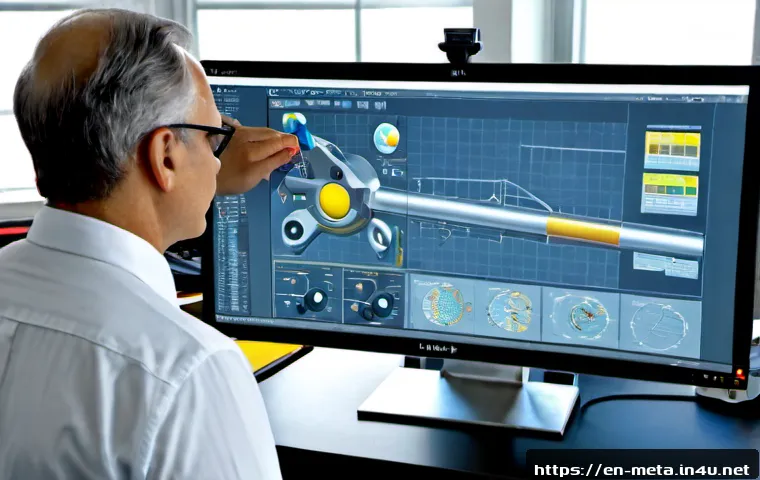
Metal fatigue analysis plays a crucial role in ensuring the safety and longevity of structures subjected to repeated stress cycles. Understanding how materials weaken over time helps engineers prevent catastrophic failures in everything from bridges to aircraft.

With advancements in simulation tools and testing methods, fatigue assessment has become more accurate and efficient than ever before. In real-world applications, I’ve seen how precise analysis can extend the service life of components and reduce costly downtime.
Whether you’re an engineer or simply curious about material durability, grasping the fundamentals of metal fatigue is essential. Let’s dive deeper and explore this topic thoroughly!
Decoding the Mechanics Behind Fatigue Failure
How Cyclic Loads Affect Metal Microstructure
Repeated loading and unloading cause tiny imperfections within the metal’s crystal lattice to multiply and grow. These microscopic cracks usually start at stress concentrators like surface scratches, welds, or corrosion pits.
Over time, each load cycle propagates the cracks incrementally, weakening the material internally long before any visible signs appear. I’ve noticed that even seemingly minor fluctuations in load can accelerate this damage if they happen frequently enough, which underscores the importance of understanding these subtle material changes early on.
The Role of Stress Concentration and Geometry
The shape and design of a component significantly influence where fatigue cracks initiate. Sharp corners, holes, or sudden changes in cross-section create localized stress peaks that act like magnets for crack formation.
During one project involving a turbine blade, we saw firsthand how redesigning a fillet radius reduced stress concentration and extended the blade’s life substantially.
It’s a vivid reminder that sometimes small geometric tweaks can have outsized impacts on durability.
Fatigue Crack Growth and Final Fracture Stages
Once initiated, cracks grow slowly through stable crack growth phases, characterized by a predictable rate depending on the applied stress intensity factor.
Eventually, when the crack reaches a critical size, the remaining cross-section can no longer support the load, leading to sudden and catastrophic fracture.
In practice, monitoring crack growth with non-destructive testing is essential to catch this before failure occurs, which I’ve seen save entire structures from collapse.
Modern Techniques for Fatigue Life Prediction
Numerical Simulation and Finite Element Analysis (FEA)
Finite Element Analysis has revolutionized fatigue assessment by allowing engineers to simulate complex stress states under cyclic loading conditions.
By inputting real operational load spectra, material properties, and environmental factors, FEA models can predict where and when fatigue cracks might develop.
I’ve personally used FEA software to optimize component designs, and the insights gained often lead to cost savings by preventing over-engineering or unexpected failures.
Experimental Testing: From Lab to Field
While simulations are powerful, physical testing remains the gold standard for validating fatigue life. Techniques like rotating bending tests, axial fatigue tests, and full-scale component tests provide empirical data on how materials behave under repeated loads.
In my experience, coupling these tests with real-world monitoring data creates a robust feedback loop that refines predictive models and improves confidence in service life estimates.
Integration of Machine Learning in Fatigue Analysis
Recently, machine learning algorithms have started to complement traditional fatigue analysis by identifying patterns in large datasets from sensors and historical failures.
These data-driven models can predict fatigue life more rapidly and adaptively, especially when dealing with complex materials or variable loading histories.
I find this approach exciting because it blends engineering intuition with computational power, making fatigue assessment smarter and more proactive.
Environmental Effects on Fatigue Performance
Corrosion Fatigue and Its Impact
Metal exposed to corrosive environments experiences accelerated fatigue damage due to the combined effects of mechanical loading and chemical attack. This synergistic degradation often leads to earlier crack initiation and faster growth rates.
I recall a case where offshore pipeline steel suffered premature failure because the fatigue design didn’t fully account for seawater corrosion, highlighting the need for integrated environmental considerations in fatigue analysis.
Temperature Influence on Material Behavior
Elevated or fluctuating temperatures can alter a metal’s mechanical properties, affecting its resistance to fatigue. High temperatures may reduce yield strength and accelerate creep, whereas low temperatures might increase brittleness.
These changes modify crack initiation and propagation characteristics, making temperature a critical factor in fatigue life predictions. In aerospace applications, for example, temperature cycling is a major design concern due to rapid ascent and descent phases.
Surface Treatments and Coatings to Mitigate Fatigue
Applying surface treatments like shot peening, laser peening, or protective coatings can significantly enhance fatigue life by inducing compressive residual stresses or preventing corrosion.
From personal experience, components treated with these methods have shown remarkable improvements in endurance during repeated loading tests. This practical approach often serves as a cost-effective way to extend service intervals without redesigning entire parts.
Understanding Fatigue Testing Standards and Methodologies
Common Fatigue Testing Protocols
Standards such as ASTM E466 or ISO 12107 provide guidelines for conducting fatigue tests under controlled laboratory conditions. These protocols specify parameters like load type, frequency, specimen geometry, and failure criteria to ensure consistency and repeatability.
I’ve always found adherence to these standards vital for generating reliable data that can be confidently used in design validation.
Interpreting S-N Curves and Fatigue Limits
S-N (Stress-Number) curves graphically represent the relationship between cyclic stress amplitude and the number of cycles to failure. Metals like steel often exhibit a fatigue limit, below which they can theoretically endure infinite cycles without failure.
Understanding these curves is crucial for setting safe design stress levels. Over the years, I’ve learned that careful interpretation combined with real operational data prevents overly conservative or risky designs.
Challenges in High-Cycle vs Low-Cycle Fatigue
High-cycle fatigue involves a large number of cycles at relatively low stresses, whereas low-cycle fatigue occurs at higher stresses with fewer cycles, often involving plastic deformation.
Each requires different testing approaches and analytical models. I’ve encountered situations where confusing these regimes led to inaccurate life predictions, underscoring the importance of correctly categorizing the fatigue type for effective analysis.
Material Selection Strategies for Fatigue Resistance

Choosing Alloys with Superior Fatigue Properties
Certain alloys inherently possess better fatigue resistance due to their microstructural features, such as fine grain size or specific phase distributions.
For example, titanium alloys and maraging steels are favored in aerospace for their excellent fatigue performance. Based on hands-on experience, selecting the right material upfront can simplify the entire fatigue management process and reduce maintenance costs.
Effect of Heat Treatment on Fatigue Life
Heat treatments like quenching, tempering, or aging can modify mechanical properties and residual stresses, directly impacting fatigue behavior. Properly applied heat treatment often enhances strength and toughness, delaying crack initiation.
I recall projects where adjusting the heat treatment process led to noticeable fatigue life improvements, proving that metallurgical control is a powerful tool in fatigue engineering.
Trade-offs Between Weight, Cost, and Durability
Designers frequently balance fatigue resistance against weight reduction and budget constraints. Lightweight materials like aluminum alloys may have lower fatigue limits than steels but are preferred in automotive or aerospace sectors for fuel efficiency.
From my perspective, making informed compromises requires integrating fatigue analysis early in the design cycle to optimize overall performance without unexpected durability issues.
Practical Monitoring and Maintenance for Fatigue Management
Non-Destructive Evaluation (NDE) Techniques
Techniques such as ultrasonic testing, magnetic particle inspection, and acoustic emission allow for early detection of fatigue cracks without damaging the component.
In maintenance routines I’ve been involved with, regular NDE inspections have been crucial in identifying issues before they escalate, enabling timely repairs and avoiding costly failures.
Implementing Condition-Based Maintenance
Rather than relying solely on fixed schedules, condition-based maintenance uses real-time data from sensors to assess fatigue damage progression. This approach optimizes maintenance intervals and resource allocation.
Having worked with vibration and strain sensors on rotating machinery, I can attest that condition-based strategies improve operational efficiency and component longevity.
Repair Techniques to Extend Fatigue Life
When fatigue damage is detected, repairs like crack welding, patching, or component replacement can restore structural integrity. The choice depends on the extent of damage and operational demands.
I’ve witnessed how timely repairs, guided by accurate fatigue assessments, prevent downtime and extend the service life of critical infrastructure.
Key Fatigue Parameters and Their Influence
Stress Ratio and Its Impact on Fatigue Life
The stress ratio, defined as the minimum to maximum stress in a cycle, influences crack growth rates and fatigue life. Higher mean stresses typically reduce fatigue resistance.
Understanding this parameter helps tailor loading conditions or design features to mitigate damage. In practice, accounting for stress ratio variations has refined my fatigue predictions and improved safety margins.
Frequency Effects in Cyclic Loading
The rate at which cyclic loads are applied can affect heat generation and microstructural responses, sometimes accelerating fatigue damage. For example, high-frequency vibrations in rotating equipment may induce localized heating and faster crack growth.
I’ve observed that incorporating frequency effects into fatigue models yields more realistic life estimates for dynamic systems.
Residual Stresses and Their Beneficial or Detrimental Roles
Residual stresses locked into a component after manufacturing or surface treatment can either retard or promote fatigue crack initiation. Compressive residual stresses are beneficial as they close cracks, while tensile stresses exacerbate damage.
Managing these stresses through process control has been a critical aspect of fatigue engineering I’ve encountered repeatedly in practice.
| Parameter | Effect on Fatigue | Practical Consideration |
|---|---|---|
| Stress Concentration | Increases crack initiation risk | Design smooth transitions, avoid sharp corners |
| Corrosion | Accelerates crack growth | Use protective coatings, monitor environment |
| Temperature | Alters material properties | Consider operational temperature range |
| Stress Ratio | Higher mean stress reduces life | Control load spectrum if possible |
| Surface Treatment | Improves fatigue resistance | Apply shot peening or coatings |
Conclusion
Understanding the complex nature of fatigue failure is essential for designing durable and safe components. Through combining advanced analysis techniques, material selection, and proper maintenance, engineers can significantly extend the service life of critical structures. My hands-on experiences have shown that proactive fatigue management not only prevents unexpected breakdowns but also optimizes overall performance.
Useful Insights to Remember
1. Early detection of microscopic cracks through non-destructive evaluation can save costly repairs and downtime.
2. Small design changes, like smoothing sharp corners, greatly reduce stress concentrations and delay crack initiation.
3. Environmental factors such as corrosion and temperature fluctuations must be integrated into fatigue life predictions for accuracy.
4. Combining experimental testing with numerical simulations provides a more reliable understanding of fatigue behavior.
5. Condition-based maintenance driven by real-time sensor data enhances safety and cost-efficiency compared to fixed schedules.
Key Takeaways for Fatigue Management
Effective fatigue management depends on recognizing the roles of stress concentration, material properties, and environmental influences. Employing modern predictive tools alongside practical testing allows for better life estimations and design optimizations. Additionally, implementing surface treatments and timely repairs can substantially improve fatigue resistance, ensuring structural integrity over extended periods. Prioritizing these aspects helps engineers deliver safer, more reliable products while balancing cost and performance demands.
Frequently Asked Questions (FAQ) 📖
Q: What exactly causes metal fatigue and how does it develop over time?
A: Metal fatigue occurs when a material is subjected to repeated cycles of stress or strain, even if those stresses are below the material’s ultimate strength.
Over time, tiny cracks begin to form at points of stress concentration, such as surface defects or sharp corners. These cracks gradually grow with each stress cycle until they reach a critical size, leading to sudden and often unexpected failure.
From my experience, the most challenging part is that fatigue damage accumulates invisibly, so regular inspection and monitoring are vital to catch early signs before catastrophic breakdowns happen.
Q: How do engineers test and predict the fatigue life of metals in real-world applications?
A: Engineers use a combination of laboratory fatigue testing, computer simulations, and material analysis to predict fatigue life. In testing, specimens are subjected to controlled cyclic loading to measure how many cycles they can endure before failure.
Modern simulation tools can replicate complex stress scenarios and environmental conditions, improving accuracy. I’ve found that integrating real-world data with simulation results offers the best insight, allowing maintenance schedules to be optimized and costly downtime avoided.
This approach is especially important in industries like aerospace and automotive, where safety and reliability are non-negotiable.
Q: Can metal fatigue be completely prevented, or is it just manageable?
A: While metal fatigue can’t be entirely prevented due to the inherent nature of repeated stress, it is definitely manageable and can be significantly slowed down.
Proper material selection, design improvements like avoiding sharp corners, surface treatments, and regular maintenance are key strategies. In practice, I’ve seen how applying surface coatings or shot peening can enhance fatigue resistance by reducing crack initiation sites.
Ultimately, the goal is to predict fatigue life accurately and take proactive measures rather than hoping to eliminate fatigue altogether, which isn’t realistic in most engineering scenarios.