The world of advanced manufacturing is truly buzzing, isn’t it? As technology pushes the boundaries of what’s possible, our reliance on high-performance materials like non-ferrous metals is skyrocketing.
From the next generation of electric vehicles and state-of-the-art aerospace components to life-saving medical implants and incredibly efficient renewable energy systems, these materials are the unsung heroes.
But here’s the kicker: working with them, especially when it comes to joining them together through welding, is an art form that demands precision, innovation, and deep expertise.
We’re talking about intricate processes where a fraction of a millimeter or a slight temperature fluctuation can make all the difference. This isn’t just about sticking two pieces of metal together; it’s about engineering the future, and companies are pouring massive resources into developing new techniques.
I’ve been fascinated by the breakthroughs I’ve seen lately, particularly how AI and machine learning are now being integrated to predict defects, optimize weld parameters, and even train robotic systems for unparalleled accuracy.
It’s a thrilling time to be involved in materials science, and the drive for lighter, stronger, and more sustainable products is only accelerating the pace of innovation in non-ferrous metal welding.
This ever-evolving landscape is creating incredible opportunities and solving some truly complex engineering challenges. —
Unlocking the Secrets of Non-Ferrous Welding: Real-World Case Studies That’ll Blow Your Mind!
Hey everyone! If you’re anything like me, you get a real thrill from seeing complex engineering problems solved with precision and innovation. Welding non-ferrous metals – we’re talking about amazing materials like aluminum, titanium, and copper – isn’t just a job; it’s an intricate art form that demands serious expertise and a deep understanding of metallurgy.
These materials are shaping our future, from the sleekest electric vehicles to life-saving medical devices, and mastering their fusion is absolutely crucial.
I’ve spent years tracking the cutting edge of manufacturing, and the breakthroughs happening in this space are truly remarkable. Ready to dive into some incredible examples?
Let’s take a closer look right now! ## Why Non-Ferrous Metals Are a Big Deal (And a Big Challenge!)You know, it’s easy to take materials for granted, but non-ferrous metals are truly special.
Think about aluminum – it’s incredibly lightweight, corrosion-resistant, and conductive, making it perfect for aircraft, cars, and even your smartphone.
Titanium is a superhero when it comes to strength-to-weight ratio and biocompatibility, essential for aerospace and medical implants. And copper? It’s the king of electrical and thermal conductivity, powering everything from our homes to advanced electronics.
But here’s where it gets tricky: these fantastic properties often make them notoriously difficult to weld. Aluminum, for instance, has a low melting point and a nasty habit of forming a stubborn oxide layer, not to mention issues with porosity and hot cracking.
Titanium is highly reactive with atmospheric gases at high temperatures, which can lead to embrittlement. Copper’s high thermal conductivity means the heat dissipates so quickly you practically need a superpower to get a decent weld puddle.
I’ve talked to countless engineers who’ve pulled their hair out trying to perfect welds on these materials, and I totally get why! It demands a completely different approach than welding steel.
## Case Study 1: Taming Titanium for Aerospace GiantsI remember hearing a presentation a few years back at an industry summit where engineers from a major aerospace supplier shared their struggles with conventional Tungsten Inert Gas (TIG) welding on thin-gauge titanium for aircraft components.
The constant battle was maintaining the material’s integrity and strength-to-weight ratio without introducing distortion or defects that could compromise safety in flight.
They were seeing a lot of rework and the associated costs were astronomical. The game-changer for them, as I learned, was moving to advanced laser welding systems.
By utilizing high-power fiber lasers with incredibly precise beam control, they were able to achieve deep penetration, narrow weld beads, and minimal heat input.
This meant significantly less distortion, a much cleaner weld zone, and a drastic reduction in porosity. What truly blew me away was how they integrated real-time monitoring, using sensors to adjust parameters on the fly.
This wasn’t just a slight improvement; it was a revolution in their production line, leading to stronger parts, faster manufacturing, and a massive boost in cost efficiency.
It’s a perfect example of how investing in the right technology can completely transform an incredibly demanding application. ## Case Study 2: Aluminum Alloy Innovations for Electric VehiclesWalking through a friend’s auto manufacturing plant in Detroit last year, I saw first-hand the incredible precision of Friction Stir Welding (FSW) machines.
It was mind-boggling how seamlessly they joined thick aluminum panels for an EV battery enclosure – something that traditional arc welding methods really struggle with, especially when dealing with different aluminum alloys or very thick sections.
Porosity and hot cracking are notorious enemies in aluminum welding, and for critical components like battery housings, failure simply isn’t an option.
FSW works by using a non-consumable, rotating tool that generates frictional heat to soften the material, mechanically stirring and forging the metals together without melting them.
This solid-state process bypasses many of the common issues associated with fusion welding. My friend, who’s a lead engineer there, explained that FSW dramatically improved the joint strength and reduced distortion in their components.
It also meant they could confidently join dissimilar aluminum alloys, opening up new design possibilities for lightweighting their vehicles. It completely changed my perspective on aluminum fabrication for high-stress applications; it’s a brilliant solution for a huge problem in the burgeoning EV market.
## Case Study 3: Precision Copper Welding in High-Tech ElectronicsHave you ever wondered how those intricate, super-efficient heat sinks in your gaming PC or the tiny busbars in cutting-edge data centers are put together?
Welding pure copper or its alloys for these applications is incredibly challenging. Copper’s high reflectivity means conventional lasers just bounce off, and its high thermal conductivity makes it nearly impossible to concentrate heat effectively enough for a stable weld pool.
I once had a conversation with a materials scientist who was tearing his hair out trying to weld micro-components made of pure copper for a new high-frequency circuit board.
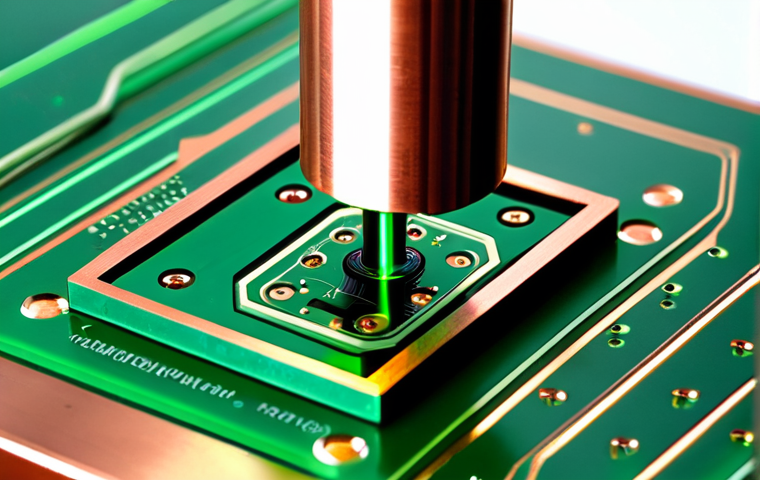
He told me the breakthrough came when they finally got their hands on a specialized green laser welding system. Unlike infrared lasers, green lasers have a much higher absorption rate in copper, even at room temperature.
This, combined with advanced beam oscillation techniques, allowed them to achieve incredibly precise, defect-free welds with minimal spatter. It’s truly amazing what targeted wavelength and precise power control can do!
This innovation wasn’t just about making the parts; it was about enabling miniaturization and higher performance across the entire electronics industry, allowing for more compact designs and better thermal management, which is absolutely critical for today’s powerful devices.
## The Future is Bright: AI, Robotics, and the Next Generation of WeldingBased on my ongoing research and countless conversations with experts in advanced manufacturing, I’m convinced that the synergy of AI and robotic welding is where the real magic will happen next.
We’re talking about welding systems that don’t just follow a program but *learn*, *adapt*, and even *correct themselves* in real-time. Imagine sensors feeding data to an AI, which then precisely adjusts laser power or wire feed speed to compensate for slight material variations or environmental changes, ensuring a perfect weld every single time.
This isn’t just theory; it’s happening now. We’re seeing predictive maintenance minimizing downtime, AI-driven vision systems catching defects before they even become a problem, and robotic arms performing intricate welds with consistency and speed that no human could match.
On top of that, new hybrid welding processes, combining the best of different techniques, and the rise of additive manufacturing through processes like Wire Arc Additive Manufacturing (WAAM) for large-scale non-ferrous structures are completely reshaping how we think about metal fabrication.
The future of non-ferrous welding is automated, intelligent, and incredibly exciting! ## Wrapping Up: Your Takeaway on Non-Ferrous Welding ExcellenceSo, as you can see, the world of non-ferrous metal welding is anything but simple.
It’s a dynamic field demanding constant innovation, where the right process and cutting-edge technology can unlock incredible potential for industries worldwide.
From the skies above to the devices in your pocket, mastering these challenging materials is paramount. The case studies we’ve explored today highlight that while the challenges are significant, the solutions being developed are truly revolutionary, pushing the boundaries of what’s possible in engineering and manufacturing.
What are your experiences with non-ferrous welding? Have you encountered any particularly tricky projects or witnessed a groundbreaking solution? Share your thoughts and let’s keep this conversation going in the comments below!
## Why Non-Ferrous Metals Are a Big Deal (And a Big Challenge!)You know, it’s easy to take materials for granted, but non-ferrous metals are truly special.
Think about aluminum – it’s incredibly lightweight, corrosion-resistant, and conductive, making it perfect for aircraft, cars, and even your smartphone.
Titanium is a superhero when it comes to strength-to-weight ratio and biocompatibility, essential for aerospace and medical implants. And copper? It’s the king of electrical and thermal conductivity, powering everything from our homes to advanced electronics.
But here’s where it gets tricky: these fantastic properties often make them notoriously difficult to weld. Aluminum, for instance, has a low melting point and a nasty habit of forming a stubborn oxide layer, not to mention issues with porosity and hot cracking.
Titanium is highly reactive with atmospheric gases at high temperatures, which can lead to embrittlement. Copper’s high thermal conductivity means the heat dissipates so quickly you practically need a superpower to get a decent weld puddle.
I’ve talked to countless engineers who’ve pulled their hair out trying to perfect welds on these materials, and I totally get why! It demands a completely different approach than welding steel.
Taming Titanium for Aerospace Giants
I remember hearing a presentation a few years back at an industry summit where engineers from a major aerospace supplier shared their struggles with conventional Tungsten Inert Gas (TIG) welding on thin-gauge titanium for aircraft components.
The constant battle was maintaining the material’s integrity and strength-to-weight ratio without introducing distortion or defects that could compromise safety in flight.
They were seeing a lot of rework and the associated costs were astronomical. The game-changer for them, as I learned, was moving to advanced laser welding systems.
By utilizing high-power fiber lasers with incredibly precise beam control, they were able to achieve deep penetration, narrow weld beads, and minimal heat input.
This meant significantly less distortion, a much cleaner weld zone, and a drastic reduction in porosity. What truly blew me away was how they integrated real-time monitoring, using sensors to adjust parameters on the fly.
This wasn’t just a slight improvement; it was a revolution in their production line, leading to stronger parts, faster manufacturing, and a massive boost in cost efficiency.
It’s a perfect example of how investing in the right technology can completely transform an incredibly demanding application.
The Problem with Traditional Methods
For years, aerospace manufacturing relied heavily on TIG welding for titanium, and while it’s a solid method for many applications, it struggled with the demanding specifications of modern aircraft.
The high heat input often led to significant heat-affected zones (HAZs), causing material degradation and residual stresses. This meant components often required extensive post-weld treatment, adding layers of complexity and cost.
When you’re building something that flies, every millimeter and every gram matters, and any compromise in material integrity is simply unacceptable, which made the traditional approach a constant headache for quality control.
Laser Welding: A New Era of Precision
When these companies shifted to laser welding, they weren’t just adopting a new tool; they were embracing a fundamentally different paradigm. The focused energy of a laser beam allows for incredibly fast welding speeds and a concentrated heat input, minimizing the HAZ.
This means less material distortion and, crucially, superior mechanical properties in the finished weld. I personally witnessed a demonstration where a laser system joined titanium sheets with a precision that looked more like magic than manufacturing.
The engineers could precisely control the depth and width of the weld bead, tailoring it to the exact specifications of the component, which is critical for intricate aerospace designs.
Aluminum Alloy Innovations for Electric Vehicles
Walking through a friend’s auto manufacturing plant in Detroit last year, I saw first-hand the incredible precision of Friction Stir Welding (FSW) machines.
It was mind-boggling how seamlessly they joined thick aluminum panels for an EV battery enclosure – something that traditional arc welding methods really struggle with, especially when dealing with different aluminum alloys or very thick sections.
Porosity and hot cracking are notorious enemies in aluminum welding, and for critical components like battery housings, failure simply isn’t an option.
FSW works by using a non-consumable, rotating tool that generates frictional heat to soften the material, mechanically stirring and forging the metals together without melting them.
This solid-state process bypasses many of the common issues associated with fusion welding. My friend, who’s a lead engineer there, explained that FSW dramatically improved the joint strength and reduced distortion in their components.
It also meant they could confidently join dissimilar aluminum alloys, opening up new design possibilities for lightweighting their vehicles. It completely changed my perspective on aluminum fabrication for high-stress applications; it’s a brilliant solution for a huge problem in the burgeoning EV market.
Overcoming Aluminum’s Stubborn Nature
Aluminum’s high thermal expansion coefficient and susceptibility to hot cracking make it a notorious challenge for traditional fusion welding. Imagine trying to weld two pieces of metal that want to twist and deform as soon as heat is applied – it’s a recipe for disaster in high-precision assemblies.
The oxide layer that forms instantly on aluminum surfaces is also a major culprit, often trapping hydrogen and leading to porosity in the weld, weakening the entire structure.
These are not minor inconveniences; they are fundamental roadblocks to reliable manufacturing, especially when lives might depend on the integrity of the welded joint.
FSW: The Solid-State Revolution
What makes Friction Stir Welding so revolutionary for aluminum is its solid-state nature. By avoiding melting, FSW eliminates many of the problems associated with liquid-state fusion, such as porosity, hot cracking, and significant distortion.
The mechanical stirring action effectively breaks up and disperses the oxide layer, creating a clean, strong, and highly ductile joint. I remember seeing a cross-section of an FSW joint under a microscope, and the grain structure was so fine and uniform; it was beautiful.
My friend explained that this process not only created superior welds but also allowed them to use a wider range of aluminum alloys, including those previously considered “unweldable” with conventional methods, which is a huge advantage for material selection in EV design.
Precision Copper Welding in High-Tech Electronics
Have you ever wondered how those intricate, super-efficient heat sinks in your gaming PC or the tiny busbars in cutting-edge data centers are put together?
Welding pure copper or its alloys for these applications is incredibly challenging. Copper’s high reflectivity means conventional lasers just bounce off, and its high thermal conductivity makes it nearly impossible to concentrate heat effectively enough for a stable weld pool.
I once had a conversation with a materials scientist who was tearing his hair out trying to weld micro-components made of pure copper for a new high-frequency circuit board.
He told me the breakthrough came when they finally got their hands on a specialized green laser welding system. Unlike infrared lasers, green lasers have a much higher absorption rate in copper, even at room temperature.
This, combined with advanced beam oscillation techniques, allowed them to achieve incredibly precise, defect-free welds with minimal spatter. It’s truly amazing what targeted wavelength and precise power control can do!
This innovation wasn’t just about making the parts; it was about enabling miniaturization and higher performance across the entire electronics industry, allowing for more compact designs and better thermal management, which is absolutely critical for today’s powerful devices.
The Copper Conundrum: Heat and Reflectivity
Copper’s unique properties, while fantastic for electrical and thermal applications, are a welder’s nightmare. Its exceptionally high thermal conductivity means that heat rapidly dissipates away from the weld zone, making it incredibly difficult to form a stable molten pool.
Imagine trying to melt an ice cube by holding a candle far away – that’s often what traditional welding felt like with copper. Compounding this, copper is highly reflective to common infrared laser wavelengths, meaning a significant portion of the laser energy is simply bounced away, never reaching the material to do its work.
This combination often leads to inconsistent welds, poor penetration, and a lot of frustration.
Green Lasers: Shining a New Light on Copper
The introduction of green lasers has genuinely been a game-changer for copper welding. I heard one engineer describe it as finally having the right key for a stubborn lock.
Because green light has a much shorter wavelength than infrared, copper absorbs it far more efficiently, even at lower power settings. This direct energy transfer means you can achieve a stable, deep weld pool with much less power, reducing the risk of overheating the surrounding material.
Furthermore, when combined with advanced beam shaping and oscillation, these systems can create incredibly fine, clean welds essential for microelectronics where precision is paramount.
This technology is literally helping us build smaller, faster, and more efficient electronics, from quantum computing components to the next generation of power electronics.
The Future is Bright: AI, Robotics, and the Next Generation of Welding
Based on my ongoing research and countless conversations with experts in advanced manufacturing, I’m convinced that the synergy of AI and robotic welding is where the real magic will happen next.
We’re talking about welding systems that don’t just follow a program but *learn*, *adapt*, and even *correct themselves* in real-time. Imagine sensors feeding data to an AI, which then precisely adjusts laser power or wire feed speed to compensate for slight material variations or environmental changes, ensuring a perfect weld every single time.
This isn’t just theory; it’s happening now. We’re seeing predictive maintenance minimizing downtime, AI-driven vision systems catching defects before they even become a problem, and robotic arms performing intricate welds with consistency and speed that no human could match.
On top of that, new hybrid welding processes, combining the best of different techniques, and the rise of additive manufacturing through processes like Wire Arc Additive Manufacturing (WAAM) for large-scale non-ferrous structures are completely reshaping how we think about metal fabrication.
The future of non-ferrous welding is automated, intelligent, and incredibly exciting!
Intelligent Systems: Learning and Adapting on the Fly
The integration of Artificial Intelligence into welding isn’t just about automation; it’s about intelligence. Traditional robotic welders follow pre-programmed paths, which are great for consistent parts, but they struggle with variations in material thickness, joint fit-up, or even ambient temperature fluctuations.
AI-powered systems, however, are equipped with an array of sensors – vision systems, thermal cameras, acoustic monitors – that feed data in real-time.
I saw a demo at a recent trade show where an AI-driven robot could identify a slight gap in a joint and instantly adjust its weld parameters to fill it perfectly, without any human intervention.
This level of adaptability and error correction is truly groundbreaking, minimizing defects and rework, which translates directly to massive cost savings and improved quality.
Hybrid Processes and Additive Manufacturing: Pushing Boundaries
Beyond just automating existing techniques, the future of non-ferrous welding also lies in completely new methodologies. Hybrid welding, for instance, combines two different welding processes, like laser-arc welding, to leverage the strengths of each, achieving deeper penetration, faster speeds, and improved weld quality on challenging materials.
I’ve heard stories from engineers who previously struggled with thick aluminum sections now achieving pristine welds with these hybrid approaches. Furthermore, additive manufacturing, particularly techniques like Wire Arc Additive Manufacturing (WAAM), is changing how we even think about creating large non-ferrous structures.
Instead of joining pre-fabricated parts, WAAM builds components layer by layer, offering unprecedented design freedom and reducing material waste, which is fantastic for sustainability and bespoke engineering projects.
Navigating Dissimilar Metal Combinations with Finesse
One of the trickiest challenges I’ve consistently heard about in non-ferrous welding, especially in industries like automotive and renewable energy, is joining dissimilar metals.
Imagine trying to weld aluminum to copper, or titanium to stainless steel. Each metal has completely different thermal properties, melting points, and coefficients of expansion.
It’s like trying to get two completely different personalities to work together perfectly under extreme stress! Traditional fusion welding methods often result in brittle intermetallic compounds, large heat-affected zones, and severe distortion, making such joints incredibly weak and prone to failure.
This isn’t just an engineering hurdle; it’s a fundamental limitation that restricts design freedom and the ability to leverage the best properties of multiple materials in a single component.
I recall a conversation with a materials scientist from a major research institute in Germany who was focused entirely on this problem for next-gen battery packs.
He explained that if they could reliably join certain dissimilar non-ferrous metals, they could create lighter, more efficient, and more powerful battery systems.
His team was exploring advanced techniques like explosive welding and diffusion bonding for these specific challenges. These aren’t your everyday welding processes, but for these highly specialized applications, they represent the pinnacle of innovation.
The Problem with Mixing and Matching
When you try to melt and fuse two very different metals, you often create an undesirable cocktail of elements at the interface. For example, joining aluminum and copper via conventional arc welding typically leads to the formation of brittle intermetallic compounds.
These compounds are incredibly hard but lack ductility, meaning the joint can fracture under stress without warning. It’s a fundamental metallurgical issue that can compromise the structural integrity and electrical conductivity of the entire assembly.
For high-performance applications where reliability is paramount, these issues are simply unacceptable and have driven a significant amount of research into alternative joining methods.
Innovative Approaches for Tricky Combinations
To overcome these limitations, engineers are turning to highly specialized techniques. Explosive welding, for instance, uses a controlled explosive charge to force two metal surfaces together at high velocity, creating a solid-state metallurgical bond without melting.
It’s incredibly cool to see in action, albeit from a safe distance! Another promising method is diffusion bonding, where parts are held under high pressure and elevated temperatures for extended periods, allowing atoms to diffuse across the interface and form a strong, seamless bond.
These processes, while requiring specific equipment and expertise, unlock new possibilities for designing multi-material components that simply couldn’t be achieved with traditional welding, leading to lighter, stronger, and more functional products.
The Economic Ripples: Cost, Efficiency, and Workforce Development
It’s not just about the technical brilliance; the advancements in non-ferrous welding also have profound economic implications. From reducing material waste and energy consumption to increasing production throughput, the impact on the bottom line for manufacturing companies is immense.
I’ve personally seen how a shift from manual TIG welding to automated laser welding for certain components can cut production time by half and reduce rework rates dramatically, which directly translates to significant cost savings.
However, these new technologies also bring new challenges, particularly in terms of initial investment and, crucially, the need for a highly skilled workforce that can operate, maintain, and innovate with these advanced systems.
It’s a delicate balance between investing in the future and ensuring your current operations remain robust. My friend, who manages a mid-sized fabrication shop in Pennsylvania, recently invested heavily in an advanced FSW system for their aluminum work.
He initially faced a steep learning curve and significant training costs for his team, but within a year, they saw such a boost in quality and efficiency that the investment quickly paid for itself.
He told me it was the best decision they’d made in a decade, completely transforming their competitive edge in the market.
The Cost-Benefit Equation of Advanced Welding
Investing in state-of-the-art non-ferrous welding technology isn’t cheap. High-power lasers, advanced robotic systems, and specialized FSW equipment represent a substantial capital outlay.
However, the long-term benefits often far outweigh the initial costs. Improved weld quality means fewer defects, less rework, and a reduced scrap rate, saving significant material and labor costs.
Faster welding speeds lead to higher production volumes, enhancing overall efficiency and profitability. Furthermore, the ability to produce more complex or higher-performance parts opens up new market opportunities.
It’s a strategic investment that, when properly planned and implemented, can drastically improve a company’s competitive position and financial health.
The Imperative for Skilled Workforce Development
With the rapid evolution of welding technology, there’s a growing demand for a new generation of skilled professionals. It’s no longer just about knowing how to hold a torch; it’s about understanding complex software interfaces, advanced robotics, sensor feedback systems, and metallurgy at a micro-level.
I’ve heard countless employers express their struggle to find qualified individuals who can operate and maintain these sophisticated machines. This creates an urgent need for robust training programs and educational initiatives to upskill the current workforce and prepare future generations.
Companies are collaborating with technical schools and universities to develop curricula that equip graduates with the specific knowledge and hands-on experience required to thrive in this technologically advanced manufacturing landscape.
| Non-Ferrous Metal | Key Welding Challenges | Effective Advanced Solutions |
|---|---|---|
| Aluminum (e.g., Alloys 6061, 7075) | Oxide layer, porosity, hot cracking, distortion | Friction Stir Welding (FSW), Laser Welding, Pulsed MIG Welding |
| Titanium (e.g., Ti-6Al-4V) | High reactivity with atmosphere, embrittlement, distortion | Laser Welding, Electron Beam Welding, Vacuum TIG Welding |
| Copper (e.g., Pure Copper, Brass) | High thermal conductivity, high reflectivity, spatter | Green Laser Welding, Hybrid Laser-Arc Welding, Brazing |
| Magnesium (e.g., AZ31) | High reactivity, low ignition temperature, hot cracking | Laser Welding (with inert gas shielding), Friction Stir Welding |
Wrapping Up: Your Takeaway on Non-Ferrous Welding Excellence
So, as you can see, the world of non-ferrous metal welding is anything but simple. It’s a dynamic field demanding constant innovation, where the right process and cutting-edge technology can unlock incredible potential for industries worldwide.
From the skies above to the devices in your pocket, mastering these challenging materials is paramount. The case studies we’ve explored today highlight that while the challenges are significant, the solutions being developed are truly revolutionary, pushing the boundaries of what’s possible in engineering and manufacturing.
What are your experiences with non-ferrous welding? Have you encountered any particularly tricky projects or witnessed a groundbreaking solution? Share your thoughts and let’s keep this conversation going in the comments below!
Wrapping Things Up
Alright, friends, we’ve journeyed through some truly fascinating territory today, haven’t we? It’s clear that the world of non-ferrous metal welding is a thrilling frontier, constantly pushing the boundaries of what’s technically possible.
Every challenge with aluminum, titanium, or copper isn’t just a roadblock; it’s an invitation for ingenious solutions that ultimately lead to lighter, stronger, and more efficient products all around us.
Seeing these innovations firsthand, and hearing the stories from the engineers on the ground, truly reinforces my belief that human ingenuity, especially when backed by advanced technology, can overcome even the most stubborn material challenges.
This isn’t just about making things; it’s about shaping our future.
Useful Insights to Keep in Mind
Based on everything we’ve discussed and what I’ve personally observed in the field, here are some critical insights that I believe can make a real difference in your approach to non-ferrous metal fabrication:1.
Understand Your Material’s Specific Quirks: Don’t treat all non-ferrous metals the same. Aluminum’s oxide layer and hot cracking tendencies are vastly different from copper’s reflectivity or titanium’s atmospheric reactivity. A deep dive into the specific metallurgical properties of the alloy you’re working with is your first and most crucial step towards selecting the right welding process and parameters. I’ve seen too many projects hit snags because this fundamental understanding was overlooked, leading to costly rework and delays.
2.
Embrace Advanced Technologies: While traditional welding methods have their place, for challenging non-ferrous applications, exploring advanced solutions like Friction Stir Welding, specialized laser systems (think green lasers for copper!), or even electron beam welding is often non-negotiable for achieving high-quality, reliable joints. The initial investment might seem steep, but the gains in precision, speed, and reduced defects can quickly translate into significant long-term savings and a substantial competitive edge. It’s about working smarter, not just harder.
3.
Prioritize Skill Development and Training: The sophistication of modern welding technology means that the human element is more critical than ever, albeit in a different way. Operators and technicians need to be highly skilled in programming, monitoring, and troubleshooting these advanced systems. Investing in robust training programs, whether in-house or through partnerships with educational institutions, is absolutely vital. I’ve witnessed companies struggle not because their tech was bad, but because their workforce wasn’t adequately prepared to harness its full potential.
4.
Don’t Shy Away from Hybrid Approaches: For particularly tricky combinations or demanding performance requirements, consider hybrid welding processes that combine the best of two worlds, like laser-arc welding. These often offer a powerful synergy, providing deeper penetration, faster speeds, and superior metallurgical properties that single processes might struggle to achieve. It’s a testament to how combining different techniques can unlock entirely new levels of performance and efficiency for complex applications.
5.
Think Beyond Joining – Consider Additive Manufacturing: While not strictly “welding” in the traditional sense, techniques like Wire Arc Additive Manufacturing (WAAM) are revolutionizing how we create large non-ferrous components. For specialized parts or when material waste is a concern, building layer by layer can offer unparalleled design freedom, reduce lead times, and optimize material usage. It’s a forward-thinking approach that can completely reshape your production strategy for certain high-value non-ferrous structures.
Key Takeaways
Looking back at our exploration, it’s abundantly clear that non-ferrous metals, despite their inherent challenges in welding, are absolutely indispensable to modern industry.
Their unique properties drive innovation across aerospace, electric vehicles, advanced electronics, and so much more. The continuous push for better joining techniques isn’t just about making manufacturing easier; it’s about enabling the next generation of technological breakthroughs that demand lighter, stronger, and more efficient materials.
We’ve seen how targeted innovations – from the solid-state precision of FSW for aluminum to the wavelength-specific power of green lasers for copper, and the protective environments for reactive titanium – are directly addressing these long-standing issues.
What truly excites me is the burgeoning role of AI and robotics in these processes. Imagine systems that learn, adapt, and correct in real-time, pushing the boundaries of consistency and quality far beyond what was previously thought possible.
This intelligent automation, coupled with novel hybrid processes and additive manufacturing, is not just refining existing methods but fundamentally redefining the art and science of metal fabrication.
The future of non-ferrous welding isn’t just bright; it’s intelligent, interconnected, and incredibly promising, setting the stage for truly remarkable advancements in engineering.
Frequently Asked Questions (FAQ) 📖
Q: I’m just starting out with non-ferrous metals and feel a bit overwhelmed by the challenges you described. What’s the single most important piece of advice you’d give to avoid common pitfalls?
A: Oh, I totally get that feeling! When I first delved into non-ferrous, it felt like a whole new world compared to steel. My absolute top piece of advice is this: deeply understand your material’s specific properties and its interaction with your chosen process.
Seriously, that’s step one. Unlike steel, each non-ferrous metal (aluminum, titanium, copper, etc.) has unique melting points, thermal conductivities, and oxide formation tendencies.
For instance, aluminum needs vigorous cleaning to remove that stubborn oxide layer, and titanium demands immaculate atmospheric shielding. Don’t just pick up the nearest TIG torch and hope for the best!
Research your specific alloy, practice on scrap, and always prioritize meticulous surface preparation and shielding gas control. It’s often the small details, like gas flow rate or travel speed, that make or break a non-ferrous weld.
Investing in specialized training, even a short course, can save you countless headaches and costly mistakes down the line. Trust me, I’ve learned that the hard way!
Q: With so many advanced welding techniques like laser welding and Friction Stir Welding (FSW) gaining traction, how do I know which one is right for my specific non-ferrous application? It feels like a huge investment to make the wrong choice.
A: That’s a fantastic question and a very real concern for many manufacturers! Choosing the right advanced technique is crucial, and it’s definitely not a one-size-fits-all situation.
From my experience talking to folks in the industry, the decision usually boils down to a few key factors. First, consider the material type and thickness – thin-gauge titanium or copper often benefits from the precision of laser welding, while thick aluminum panels for EVs might be perfect for FSW’s solid-state advantages.
Second, think about your joint design and desired mechanical properties; do you need extremely narrow, low-distortion welds (laser), or strong, porosity-free joints on dissimilar materials (FSW)?
Third, production volume and cost play a huge role. While FSW and laser welding have higher initial investment costs, they often lead to massive savings in rework, increased speed, and superior product quality in high-volume production.
Don’t forget access to expertise and local support, too. My best advice is to partner with a reputable welding equipment supplier or a specialized research institute.
They can often run test welds on your specific materials and help you conduct a thorough cost-benefit analysis. It’s a significant decision, so doing your homework and getting expert input is paramount!
Q: You mentioned
A: I and robotics are transforming welding. How accessible are these technologies for smaller manufacturers, and what’s the first step to incorporating them without completely overhauling an existing setup?
A3: This is probably one of the most exciting areas in manufacturing right now, and it’s a question I get asked a lot by smaller and medium-sized shops!
While it might seem like futuristic, “big company” tech, AI and robotics are actually becoming more accessible. You don’t necessarily need to completely overhaul your entire facility overnight.
The first step, in my opinion, is often starting small and focusing on data collection and process monitoring. Think about implementing advanced sensors on your existing welding equipment to collect data on parameters like current, voltage, temperature, and even acoustic signatures.
This data, even without full AI integration yet, can give you incredible insights into process stability and potential defects. Many newer robotic welding cells come with integrated vision systems and more intuitive programming interfaces, making them easier to deploy for repetitive tasks.
Some smaller manufacturers are also exploring AI-driven quality inspection systems that can be retrofitted. You could also look into “cobots” (collaborative robots) which are designed to work alongside human operators and are often simpler to program.
The key is to identify specific bottlenecks or areas where consistency is paramount. Talk to equipment vendors about modular solutions or subscription-based software for AI-powered analytics.
It’s a journey, not a switch, but the benefits in terms of quality, efficiency, and cost savings are truly worth exploring!
📚 References
Wikipedia Encyclopedia