Hey there, fellow curious minds! Have you ever wondered about the unseen forces shaping our modern world, from the incredibly strong alloys in aerospace to the tiny, intricate components in your smart devices?
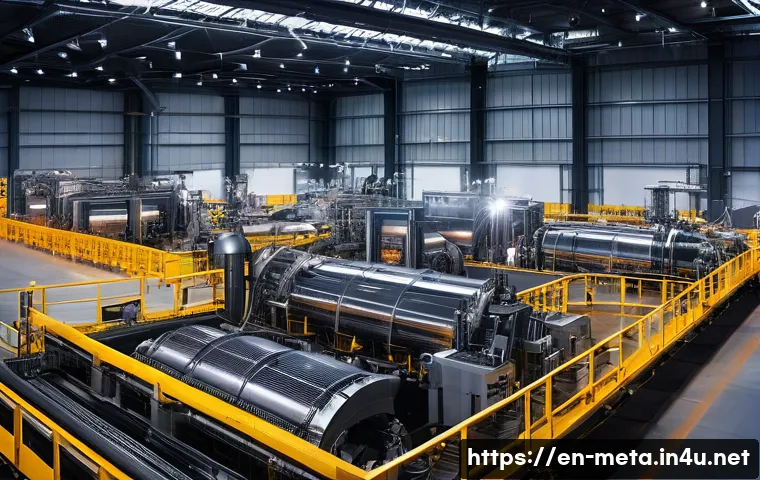
It’s all thanks to metallurgy, a dynamic field that’s constantly innovating with advanced materials and embracing sustainability to build a greener future.
Believe me, understanding how we develop, refine, and utilize metals is more exciting than ever. I’ve personally seen how these foundational principles are powering cutting-edge industries and driving breakthroughs in everything from electric vehicles to renewable energy.
Ready to explore the core concepts that make our world tick? Let’s dive deep into the fascinating basic principles of metallurgy right now!
The Atomic Dance: How Materials Get Their Mojo
Crystalline Structures: The Invisible Architects
Have you ever stopped to think about what actually makes a metal strong, or bendable, or shiny? It all boils down to how its atoms are arranged, which is just wild to consider!
When we talk about crystalline structures, we’re really peeking into the microscopic blueprint that dictates a material’s personality. Imagine building with LEGOs; how you stack those tiny bricks determines if you end up with a sturdy castle or a wobbly tower.
Metals are pretty much the same! Their atoms aren’t just scattered randomly; they settle into highly ordered, repeating patterns like Body-Centered Cubic (BCC) or Face-Centered Cubic (FCC).
This fundamental arrangement, which honestly blew my mind when I first learned about it, is a game-changer for engineers. I remember seeing demonstrations in college where a tiny shift in atomic packing completely transformed how a metal behaved under stress.
It’s like discovering the secret handshake that gives a material its unique powers, whether it’s the tough steel in a skyscraper or the super-ductile copper in electrical wiring.
Understanding these intricate atomic dances is truly the first step in mastering material science and it’s why seemingly minor changes can lead to huge breakthroughs in performance.
Bonding Basics: What Holds It All Together?
Once you wrap your head around the atomic arrangement, the next big piece of the puzzle is understanding the bonds that hold these atoms together. And let me tell you, metallic bonds are a special kind of magic!
Unlike the rigid sharing in covalent bonds or the outright transfer in ionic bonds, metallic bonds are more like a communal electron party. Imagine a crowd of excited electrons, all buzzing around and shared freely among a lattice of positively charged metal ions.
This “sea of electrons” isn’t just a cool concept; it’s the fundamental reason why metals are so uniquely metallic. It explains their incredible electrical and thermal conductivity – those free electrons are perfect for shuttling energy around.
It also explains their malleability and ductility; when you bend a piece of metal, those ions can slide past each other without breaking the overall bond, much like a crowd shifting without losing cohesion.
I’ve personally experimented with various metals and alloys, and you can practically feel the difference that these bond types create in their workability.
This electron freedom is also why metals reflect light so well, giving them that characteristic luster we all love. It’s a foundational concept that underpins so much of what we experience daily with metal products.
Imperfections: The Unexpected Strengths
Now, here’s a twist that might surprise you: sometimes, imperfections are actually a good thing! In the perfect, theoretical world of metallurgy, atoms line up flawlessly.
But in reality, metals are full of “defects” – tiny irregularities in their crystalline structure. And guess what? These aren’t always flaws; often, they’re strategically introduced to make materials even stronger.
We’re talking about things like dislocations, which are extra planes of atoms squeezed into the lattice, or grain boundaries, where different crystalline orientations meet.
When I first heard about this, it seemed counterintuitive, like saying a brick wall is stronger with a few missing bricks, but it’s true! Think about it: when you try to deform a metal, these dislocations get tangled up and resist movement, making the material harder to bend or break.
This principle is at the heart of work hardening and alloying, where we intentionally introduce elements to create these beneficial imperfections. It’s a prime example of how engineers leverage nature’s “mistakes” to enhance performance, creating everything from tougher gears to more resilient aircraft components.
It truly highlights the nuanced artistry involved in materials science.
From Earth’s Embrace to Everyday Marvels: The Journey of Metals
Extracting Riches: The First Steps
The journey of a metal, from its humble beginnings deep within the earth to becoming a part of our everyday lives, is nothing short of fascinating. It all kicks off with extraction, where we mine the raw ores that contain the metallic elements we’re after.
This isn’t just digging a hole; it’s a massive, complex operation that involves everything from heavy machinery tearing through rock to sophisticated chemical processes separating the valuable minerals from the dross.
I’ve had the chance to visit a few mining sites (virtually, thankfully, as they’re not exactly tourist traps!), and the sheer scale of the operations is mind-boggling.
It’s a delicate balance of engineering, geology, and environmental management, ensuring we get what we need while minimizing our impact on the planet.
From iron ore that will become the steel frames of our buildings, to bauxite that will be refined into aluminum for our soda cans and airplanes, each metal has its own unique extraction story.
It’s a foundational step that sets the stage for everything that follows, and it reminds you just how much effort goes into producing the materials we often take for granted.
Refinement and Purification: Cleaning Up Our Act
Once we’ve pulled the raw ore from the earth, it’s far from ready for prime time. This is where refinement and purification come in, and it’s essentially a massive clean-up operation.
Imagine trying to bake a cake with dirt in your flour – you wouldn’t, right? The same goes for metals. Ores are full of impurities, and these unwanted elements can drastically alter a metal’s properties, often for the worse.
So, we employ various techniques, like smelting, electrolysis, and chemical processes, to remove those pesky non-metallic elements and other contaminants.
For example, converting iron ore into usable iron involves blast furnaces that strip away oxygen, and then further refining into steel often means reducing carbon and adding specific alloying elements to get the desired strength and flexibility.
I’ve seen some incredible documentaries showing molten metal being poured and purified, and it truly looks like liquid magic. This stage is absolutely critical because even tiny percentages of impurities can completely change how a metal performs, affecting everything from its strength to its corrosion resistance.
Achieving that high level of purity is an art form in itself, and it’s why the metals we use are so reliable and effective.
Shaping the Future: Forming and Fabrication
After a metal has been extracted and purified, it’s time to give it purpose – this is where forming and fabrication come into play. This stage is all about transforming raw metal into useful shapes and components, and it’s where the real creative engineering happens.
We’re talking about a huge array of techniques, from traditional methods like forging, rolling, and casting, to more modern innovations like additive manufacturing (3D printing with metal!).
I once watched a blacksmith at a historical fair expertly forge a piece of steel, and the way he manipulated the metal with heat and force was mesmerizing; it really showed the foundational principles in action.
In modern industrial settings, we see giant rolling mills flattening steel into sheets for car bodies, or massive presses stamping out intricate parts.
Casting molten metal into molds allows for complex shapes, while extrusion pushes metal through a die to create long, uniform profiles. Each method has its own advantages, depending on the desired shape, strength, and cost.
This is where the theoretical properties of the metal really meet the practical demands of design and manufacturing, turning blocks of metal into the countless items we interact with every single day, from the frame of your smartphone to the engine block of a car.
The Green Revolution: Making Metallurgy Sustainable
Recycling’s Role: A Circular Economy for Metals
Let’s be honest, the idea of a circular economy isn’t just a buzzword anymore; it’s a necessity, and metallurgy is absolutely at the forefront of this movement.
The sheer amount of energy and resources required to extract and refine virgin metals is substantial, which is why metal recycling has become such a critical pillar of sustainable practices.
When we recycle metals, we’re not just diverting waste from landfills; we’re significantly reducing energy consumption, often by 70-95% compared to producing new metal from ore.
Think about aluminum cans: recycling them saves an enormous amount of energy, enough to power a TV for three hours for every can recycled! I remember being genuinely shocked by those statistics.
It’s a powerful testament to the impact individuals can have just by tossing their soda can into the right bin. This process also cuts down on greenhouse gas emissions and minimizes the environmental disruption associated with mining.
Steel, aluminum, copper – these materials can be recycled repeatedly without significant loss of quality, making them incredibly valuable components in a truly circular economic model.
This shift towards valuing end-of-life products as new raw materials is not just eco-friendly; it’s smart business, too, and I love seeing the innovation in this space.
Eco-Friendly Processing: Reducing Our Footprint
Beyond just recycling, the entire metallurgical industry is making massive strides in adopting more eco-friendly processing methods. It’s a commitment to reducing our environmental footprint at every stage, from the moment an ore is extracted to the final product.
This means investing in technologies that minimize waste, lower energy consumption, and reduce harmful emissions. For instance, many modern smelters are now equipped with advanced gas cleaning systems to capture pollutants, and there’s a huge push towards electrifying processes that traditionally relied on fossil fuels.
Imagine the shift in steelmaking, for example, with the development of electric arc furnaces that can utilize scrap metal more efficiently and reduce carbon emissions significantly compared to traditional blast furnaces.
I’ve read about incredible research into using hydrogen as a reducing agent instead of coke, which would virtually eliminate CO2 emissions from iron production – how amazing is that?
These innovations aren’t just about regulatory compliance; they’re driven by a genuine understanding that sustainable practices are essential for the industry’s long-term viability and public acceptance.
It’s a continuous journey of improvement, and it’s inspiring to see the dedication to cleaner, greener metal production.
Innovative Materials for a Sustainable World
And it’s not just about how we process existing metals; it’s also about developing entirely new materials that are inherently more sustainable. This area is incredibly exciting because it involves designing metals and alloys from the ground up with environmental impact in mind.
We’re talking about lightweight alloys that improve fuel efficiency in vehicles and aircraft, reducing energy consumption during operation. Think about the push for advanced aluminum and magnesium alloys in electric vehicles – lighter vehicles mean longer range and less battery strain.
There’s also the development of corrosion-resistant alloys that extend the lifespan of products, reducing the need for replacements and minimizing resource depletion.
I often geek out over the advancements in these areas, like self-healing materials that can repair minor damage, or biomimetic alloys inspired by natural structures.
It’s a field where innovation directly translates to environmental benefits. The focus is on materials that are more durable, more efficient to produce, and easier to recycle at the end of their life.
This forward-thinking approach is fundamental to building a greener future, and it shows that metallurgy isn’t just about brute strength, but also about intelligent, sustainable design.
Beyond the Ordinary: Advanced Alloys and Smart Materials
Superalloys: Pushing the Limits of Performance
Just when you think you’ve got a handle on what metals can do, the world of superalloys comes along and blows your mind all over again. These aren’t your grandpa’s run-of-the-mill metals; superalloys are the rockstars of the materials world, engineered to perform under the most extreme conditions imaginable.
We’re talking about incredible strength at blistering high temperatures, exceptional creep resistance (meaning they won’t slowly deform under stress), and superior corrosion resistance, even in harsh chemical environments.
Think about the inside of a jet engine: temperatures can reach well over 1,000 degrees Celsius, and the turbine blades are spinning at thousands of RPM.
Only superalloys – often nickel-, cobalt-, or iron-based with a cocktail of other elements like chromium, molybdenum, and titanium – can withstand such an onslaught.
I’ve seen footage of these alloys glowing red-hot and still maintaining their structural integrity, and it’s just awe-inspiring. They’re literally what makes modern aerospace, power generation, and even some high-performance automotive engines possible.
Without superalloys, our modern world, with its fast air travel and efficient energy production, simply wouldn’t exist as we know it. They are truly the unsung heroes operating at the very edge of material science.
Shape-Memory Alloys: Materials with a Mind of Their Own
If superalloys are the muscle, then shape-memory alloys (SMAs) are definitely the brains of the advanced materials family. These are some of the coolest materials I’ve ever encountered because they possess an almost magical ability to “remember” a pre-set shape and return to it when heated.
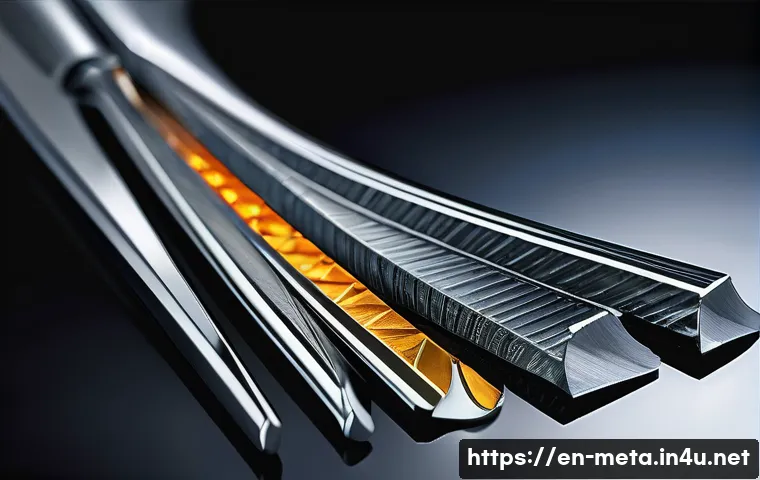
Imagine a metal wire that you can bend and twist into any configuration, but then, with a little warmth, it springs back to its original straight form!
The most famous example is Nitinol, an alloy of nickel and titanium. This isn’t science fiction; it’s a real-world phenomenon driven by a reversible phase transformation within the material’s atomic structure.
I remember being completely captivated by demonstrations of SMAs, seeing how they could be used in everything from orthodontic braces that gently realign teeth with body heat, to deployable structures in space that unfurl when exposed to the sun.
Even medical stents, which are inserted into arteries and then expand to open blockages, utilize this incredible property. It’s a fascinating blend of physics and engineering, offering precise, actuator-like functions without complex mechanical components.
The potential applications are vast and continue to expand, truly demonstrating how smart materials are changing how we design and interact with technology.
Composites and Nanomaterials: The Next Generation
While not strictly “metals” in the traditional sense, the study of metallurgy often extends into the incredible realm of composites and nanomaterials, because understanding how metals interact with other materials is crucial for designing the next generation of high-performance components.
Composites, like carbon fiber reinforced polymers (CFRPs) used in high-performance cars and aircraft, combine the best properties of different materials – say, the stiffness of carbon fibers with the toughness of a polymer matrix.
It’s like a super-team where each member brings a unique strength. On an even tinier scale, nanomaterials are revolutionizing what’s possible. Imagine materials where we manipulate atoms at the nanometer level, creating structures with entirely new and enhanced properties.
We’re talking about incredibly strong and lightweight components, materials with enhanced electrical conductivity, or even advanced catalytic properties.
I’ve often thought about how these ultra-light, ultra-strong composite structures contribute to everything from making our bicycles faster to enabling lighter, more fuel-efficient spacecraft.
The implications for aerospace, medicine, and electronics are mind-boggling. This area truly represents the frontier of material science, where conventional boundaries blur, and the possibilities seem almost limitless.
Guardians of Quality: Ensuring Metal Integrity and Performance
Testing and Characterization: Peeking Inside the Metal
Okay, so we’ve got our metals, we’ve shaped them, but how do we know they’re actually going to do what they’re supposed to? This is where testing and characterization come in, and it’s a critical step that essentially lets us peek inside the metal and understand its true personality.
It’s not just about banging on a piece of metal to see if it breaks! We use a whole arsenal of sophisticated techniques, both destructive and non-destructive.
Imagine pulling a metal rod until it breaks to measure its tensile strength, or indenting it with a hard sphere to determine its hardness. On the non-destructive side, we might use X-rays to look for internal flaws, ultrasonic waves to detect hidden cracks, or even magnetic particles to reveal surface imperfections.
I’ve personally seen how vital these tests are in ensuring safety and reliability, especially in industries like aerospace and medical devices where failure simply isn’t an option.
It’s a painstaking process, but absolutely essential for verifying that the material meets stringent specifications and will perform reliably under the stresses it’s designed to endure.
This meticulous attention to detail is what gives us confidence in the materials that literally hold our world together.
Failure Analysis: Learning from What Goes Wrong
While we strive for perfection, sometimes things go wrong. And when they do, failure analysis becomes one of the most crucial tools in a metallurgist’s belt.
It’s like being a detective, meticulously investigating why a component broke, cracked, or corroded unexpectedly. This isn’t about pointing fingers; it’s about understanding the root cause so we can prevent similar failures in the future.
Experts will examine fracture surfaces under powerful microscopes, analyze chemical compositions, and even run simulations to reconstruct the conditions that led to the failure.
I remember a case study about an aircraft component failure that, through detailed metallurgical analysis, revealed a tiny manufacturing defect that led to catastrophic results.
Learning from these incidents is invaluable, leading to improvements in material selection, design, processing, and quality control. It’s a testament to the scientific method in action, turning potential disasters into lessons learned that make our technologies safer and more robust.
This field combines scientific rigor with a problem-solving mindset, and it’s absolutely vital for continuous improvement in material engineering.
Surface Engineering: A Protective Shield for Metals
Think about your car’s paint job or the coating on a non-stick pan – those are everyday examples of surface engineering, and in metallurgy, it’s about giving metals an extra layer of protection and enhanced functionality.
While the bulk properties of a metal are important, it’s often the surface that takes the brunt of the abuse from the environment, wear, and corrosion.
Surface engineering techniques involve modifying the surface of a metal without significantly changing its underlying properties. This can range from applying thin coatings like chrome plating for corrosion resistance and aesthetics, to thermal spraying specialized ceramics for wear resistance in turbine blades, or even ion implantation to harden the surface of tools.
I find this area particularly cool because it allows us to optimize a material for specific challenges. For example, a relatively inexpensive steel can be given a high-performance surface to withstand harsh conditions, extending its lifespan and reducing costs.
It’s a smart way to get more out of materials, protecting them from degradation and improving their performance in countless applications, from cutting tools to biomedical implants.
Metallurgy’s Future: Innovations Powering Tomorrow’s World
Additive Manufacturing: 3D Printing Metals
Get ready, because additive manufacturing, or 3D printing, is absolutely revolutionizing the way we think about metal parts, and it’s going to reshape industries for decades to come!
Instead of cutting away material from a larger block (subtractive manufacturing), additive manufacturing builds objects layer by painstaking layer, directly from a digital design.
Imagine printing a complex metal part for a rocket engine with internal channels that traditional methods could never achieve. This technology allows for unprecedented design freedom, enabling incredibly intricate geometries, custom parts on demand, and significant weight reduction – which is a huge deal for aerospace and automotive industries.
I’ve seen some incredible examples of lattice structures and organic shapes printed in titanium and stainless steel, and it truly feels like we’re living in the future.
The ability to create functional prototypes quickly and produce highly customized components without expensive tooling is a game-changer. While there are still challenges to overcome, particularly in scaling production and ensuring consistent material properties, the trajectory for metal 3D printing is undeniably upward.
It’s a fascinating blend of materials science, digital design, and advanced manufacturing that’s already powering innovation across the globe.
Digital Metallurgy: AI and Machine Learning in Action
Hold onto your hats, because the future of metallurgy isn’t just about new processes; it’s also about harnessing the power of data and artificial intelligence!
Digital metallurgy is rapidly emerging, using AI and machine learning to accelerate materials discovery, optimize manufacturing processes, and predict material behavior with incredible accuracy.
Imagine simulating countless alloy compositions and processing parameters on a computer, rather than spending months or years in a lab doing physical experiments.
This means faster development cycles for new materials and more efficient production lines. I’ve been following developments where AI algorithms are being used to analyze vast datasets from material testing, identifying subtle patterns and correlations that human researchers might miss.
This can lead to predicting material properties before they’re even made, or diagnosing potential issues in a manufacturing process before they become costly problems.
It’s like having a super-intelligent assistant helping metallurgists make more informed decisions, pushing the boundaries of what’s possible in materials science.
This integration of data science with traditional metallurgy is set to unlock unprecedented levels of efficiency, innovation, and understanding.
Biometallurgy: Merging Materials with Life
Here’s a field that truly blows my mind and highlights the incredible versatility of metallurgy: biometallurgy. This is where the world of metals intersects with biology and medicine, focusing on materials designed to interact harmoniously with the human body.
We’re talking about everything from biocompatible implants like hip and knee replacements made from titanium or cobalt-chromium alloys, to intricate surgical tools and even advanced drug delivery systems.
The challenge here is immense: materials must be non-toxic, corrosion-resistant in a biological environment, and often possess specific mechanical properties to mimic natural tissues.
I often think about the painstaking research that goes into ensuring these materials are safe and effective, literally helping people regain mobility and improve their quality of life.
Beyond implants, biometallurgy also delves into things like using microbes to extract metals from low-grade ores, or even developing new antimicrobial metal surfaces for hospitals.
It’s a field that demands both metallurgical expertise and a deep understanding of biological systems, pushing the boundaries of interdisciplinary science to create solutions that directly benefit human health and environmental sustainability.
| Alloy Type | Key Elements | Primary Characteristics | Common Applications |
|---|---|---|---|
| Stainless Steel | Iron, Chromium, Nickel | Corrosion resistance, strength, aesthetic appeal | Kitchenware, surgical instruments, architectural facades, automotive parts |
| Aluminum Alloys | Aluminum, Copper, Magnesium, Zinc | Lightweight, high strength-to-weight ratio, corrosion resistance | Aircraft fuselages, beverage cans, car bodies, window frames |
| Brass | Copper, Zinc | Good machinability, excellent electrical conductivity, corrosion resistance | Plumbing fixtures, musical instruments, decorative items, electrical connectors |
| Bronze | Copper, Tin | High strength, ductility, wear resistance, good casting properties | Sculptures, bearings, marine fittings, bells, electrical contacts |
| Titanium Alloys | Titanium, Aluminum, Vanadium | Exceptional strength-to-weight ratio, excellent corrosion resistance, biocompatibility | Aerospace components, medical implants, high-performance sporting goods |
Closing Remarks
Whew! What a journey we’ve been on today, diving deep into the incredible world of metals. From the minuscule dance of atoms to the grand scale of global innovation, it’s clear that materials science isn’t just about cold, hard elements – it’s about the very foundation of our modern world and the endless possibilities of tomorrow. I truly hope you’ve gained a fresh perspective on the marvels we often take for granted and feel as excited as I do about the future of metallurgy. Keep exploring, keep questioning, and let’s continue to marvel at how these fundamental building blocks shape our lives!
Useful Information to Know
1. Ever wondered why some metals are super strong but others are really easy to bend? A huge factor is something called “grain size.” Imagine tiny crystals making up the metal; the smaller and more uniform these grains are, the tougher and more ductile the material often becomes! It’s like having more, smaller bricks in a wall – it just holds up better. This microscopic detail is a game-changer for engineers designing everything from car parts to bridge components, directly influencing how a material behaves under stress and strain.
2. That shiny stainless steel fork you use every day has a secret superpower: a passive layer of chromium oxide! This incredibly thin, invisible film forms naturally on the surface, constantly repairing itself when scratched. It’s this self-healing shield that makes stainless steel resistant to rust and corrosion, keeping your kitchenware looking new and hygienic. Without this clever atomic trick, our modern kitchens would be a lot rustier, and many medical instruments wouldn’t be nearly as reliable. It truly is a marvel of material science working quietly in the background.
3. The concept of “alloying” might sound super technical, but it’s actually an ancient art that has revolutionized human civilization! Even thousands of years ago, people discovered that mixing two or more metals, like copper and tin to create bronze, resulted in a material far superior to its individual components. This fundamental principle continues to drive innovation today, allowing us to engineer materials with tailor-made properties, whether it’s for an airplane wing, a surgical implant, or even the precise components in your smartphone. It’s about getting the best of all worlds, literally.
4. When you think about advanced metals, don’t just picture strength! For things like spacecraft, satellites, and even high-performance electronics, materials are often chosen for their ability to withstand extreme temperatures, powerful radiation, and corrosive environments without breaking down. This requires intricate knowledge of how materials behave under intense cosmic conditions, far beyond what we experience on Earth. Imagine a metal that can survive the vacuum of space and massive temperature swings – that’s the kind of resilience material scientists are constantly striving for in these cutting-edge applications, pushing the boundaries of durability and reliability.
5. Ever get curious about what your gadgets are actually made of? It’s pretty cool to dig a little deeper! You can often find a lot of fascinating details about the specific metals and alloys used in your electronics or appliances by looking up their product specifications or sometimes even their material safety data sheets (MSDS) online. These documents often list key characteristics and compositions, giving you a peek into the engineering marvels you interact with daily. It’s a great way to connect the abstract world of metallurgy to the tangible items in your hands, adding a whole new layer of appreciation for design and manufacturing.
Key Takeaways
In essence, metallurgy is a dynamic and ever-evolving field that fundamentally shapes our world. We’ve explored how a metal’s internal atomic structure and bonding dictate its properties, and how even “imperfections” can be engineered for strength. We’ve traced the journey of metals from their extraction and refinement to their transformation into everyday marvels through forming and fabrication. Crucially, we highlighted the industry’s pivot towards sustainability through recycling, eco-friendly processing, and the creation of innovative materials. Finally, we peeked into the future with superalloys, shape-memory wonders, advanced composites, and the transformative power of additive manufacturing and digital metallurgy. Understanding these principles not only demystifies the materials around us but also reveals the endless potential for innovation that drives progress across countless industries. It’s a field that truly combines scientific rigor with creative engineering, always pushing the boundaries of what’s possible.
Frequently Asked Questions (FAQ) 📖
Q: What exactly is metallurgy, and why should I care about it in my everyday life?
A: That’s a fantastic question, and one I get asked a lot! When I first started digging into this, I realized metallurgy isn’t just about smashing rocks together to get metal – it’s a deep, fascinating science and art of understanding, processing, and applying metals and alloys.
Think of it as knowing exactly how to make a metal strong enough for a skyscraper, flexible enough for a tiny wire in your phone, or corrosion-resistant enough for medical implants.
Personally, I’ve seen how understanding even the basic principles can open your eyes to the incredible engineering behind everyday items. Every time you pick up your smartphone, drive an electric car, or even just use a sturdy pan in your kitchen, you’re interacting with the direct results of metallurgical innovations.
It’s truly the invisible backbone of our modern world, making things possible that would have seemed like science fiction just a few decades ago. We’re talking about everything from the super-light frames of airplanes that make air travel safe and efficient, to the tiny, complex circuits that power your favorite gadgets.
Q: You mentioned advanced materials and sustainability. How is metallurgy helping to build a “greener future” and what kinds of new materials are we seeing?
A: Oh, this is where metallurgy gets really exciting for me! The push for a greener future is a huge driver in metallurgical innovation right now. It’s not just about making things; it’s about making them smarter, more efficient, and with less environmental impact.
I’ve been following how researchers are developing incredible new alloys that are lighter yet stronger, which means everything from electric vehicles to wind turbines can operate more efficiently, using less energy and fewer raw materials.
Think about how much energy an airplane can save if its components are significantly lighter without compromising safety! On the sustainability front, metallurgists are also perfecting recycling processes, finding ways to extract and reuse valuable metals from electronic waste, for example, rather than digging up new resources.
And let’s not forget about creating materials that resist corrosion better, extending the lifespan of products and reducing the need for constant replacements.
It’s a field that’s truly at the forefront of tackling climate change and resource scarcity, and honestly, seeing these advancements firsthand makes me incredibly optimistic about our future.
Q: Okay, so it’s important. But what industries are really benefiting from these metallurgical breakthroughs you’re talking about?
A: If you ask me, almost every industry is benefiting, but some are absolutely transforming because of metallurgical advancements! From what I’ve observed, aerospace is a massive one – imagine lighter, stronger alloys that allow planes to fly further with less fuel, or withstand extreme temperatures in jet engines.
Then there’s the entire automotive sector, especially with the boom in electric vehicles (EVs). Metallurgy is crucial for developing the lightweight battery casings, efficient electric motors, and robust chassis needed for these next-generation cars.
I’ve even seen how medical technology relies heavily on metallurgy for biocompatible implants, surgical tools, and imaging equipment. Renewable energy, like wind and solar, wouldn’t be where it is without specialized metals for turbines that can withstand harsh environments or materials for highly efficient solar panels.
And let’s not forget consumer electronics – from your smartphone to your laptop, the miniaturization and increased performance we crave are directly enabled by the incredibly precise and advanced metallurgical processes that create their tiny, powerful components.
It’s genuinely mind-boggling how foundational metallurgy is to so many cutting-edge fields.